



Sewage Cleanup Services: Fast Response to a Fast-Moving Health Hazard
Sewage water is a Category 3 biohazard that can carry bacteria, viruses and parasites. Within hours, it can soak into flooring, drywall, insulation and furniture, spreading contamination well beyond the spot where the backup started.
ServiceMaster Professional Cleaning and Restoration brings trained technicians, professional extraction equipment and strict safety procedures to every sewage cleanup. We remove the contamination, stop it from spreading and restore the property to a clean, safe condition. Available 24/7.
Sewage Backup in Your Property? Take These Steps Right Away
Sewage is not a do-it-yourself situation. It involves health risks and materials that need professional handling. Once you discover a backup:
- Keep everyone out of the affected area: children, pets and anyone with health concerns should stay away from the contaminated zone.
- Don’t touch the water or wet items: sewage can carry harmful microorganisms, and wading through it can spread them through the property.
- Stop using toilets, sinks and drains: more water down the line can push more sewage into the building.
- Stay away from electrical hazards: if water is near outlets or appliances, don’t enter. Turn off power only if it’s safe to do so.
- Don’t use fans or a household vacuum: they can spread contamination through the air.
- Take photos before anything is moved: a record of the damage supports insurance claims.
- Call ServiceMaster Professional Cleaning and Restoration: we’ll guide you through the next steps and send a team.
Every hour counts. Sewage that sits untreated spreads deeper into building materials, which raises cleanup costs and health risks.
What Causes Sewage Backups, and Why Some Properties Are Hit Again and Again ?
A sewage backup is usually a symptom of a bigger problem in the plumbing system. Understanding the cause helps prevent a repeat.
Aging or Damaged Sewer Lines
Pipes made of clay, cast iron or older materials can crack, collapse or separate at the joints over time. A damaged line gives sewage nowhere to go but back into the property.
Tree Root Intrusion
Roots are drawn to moisture and can force their way into small pipe openings. As they grow, they trap debris and block the flow.
Clogs From Grease, Wipes and Debris
Grease, “flushable” wipes, hygiene products and other debris build up inside pipes and create blockages that cause overflows.
Heavy Rain and Overloaded Systems
Storms can overwhelm municipal sewers and force contaminated water into basements through floor drains and lower-level fixtures.
Pump and Equipment Failure
Sump pumps and sewage ejector pumps protect lower levels. When they fail or lose power, wastewater can overflow quickly.
Our Sewage Cleanup Process: From Emergency Response to Full Restoration
We follow a clear, step-by-step process that removes the contamination and rebuilds what was lost.
01
Emergency Assessment and Safety Check
Our technicians inspect the property, identify the source and spread of the contamination and plan the safest way to proceed. You’ll receive a clear plan and estimate before work begins.
02
Containment and Protection
We put on protective equipment and set up barriers to keep contamination from moving into clean areas of the property.
03
Sewage Water Extraction
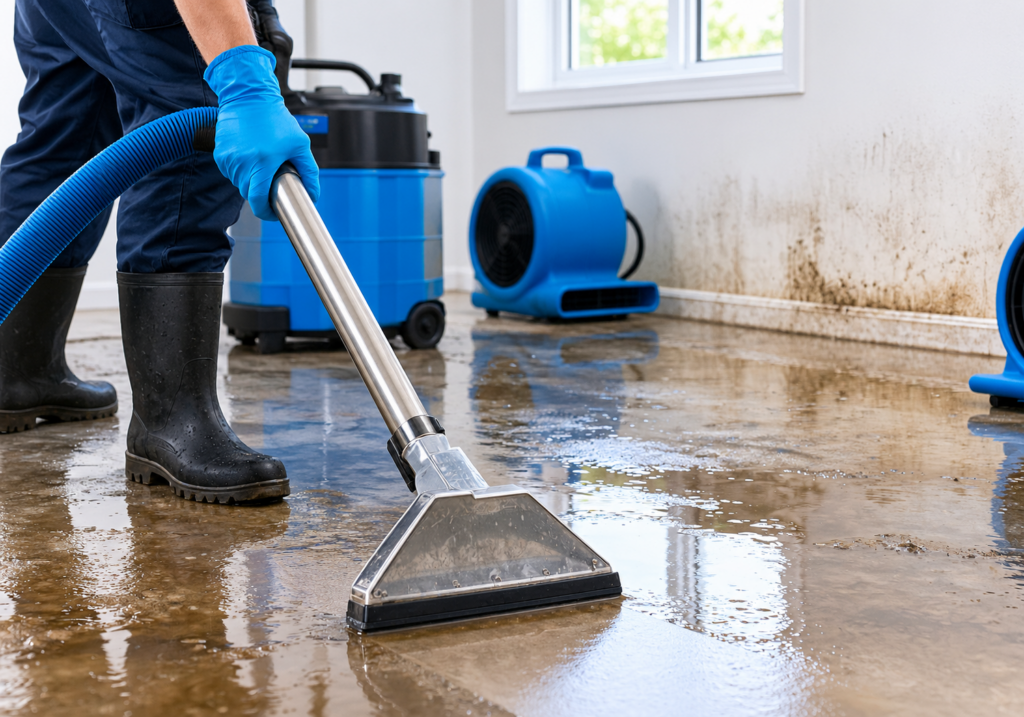
Professional pumps and extractors remove standing sewage water from floors, basements and low-lying areas.
04
Removal of Contaminated Materials
Porous materials that have absorbed sewage, such as carpet, padding, drywall and insulation, can’t be cleaned safely. We remove them and dispose of them properly.
05
Cleaning, Disinfecting and Deodorizing
We clean and disinfect floors, walls, subfloors and other affected surfaces, and we treat lingering odors at the source instead of masking them.
06
Drying and Restoration
Industrial drying equipment brings the structure back to safe moisture levels, which helps prevent mold. We then rebuild and repair removed materials so the property is ready to use again.
What Types of Sewage Problems Do We Clean Up?
We respond to sewage contamination in homes, rentals and commercial buildings, including:
- Main sewer line backups through floor drains and tubs: sewage pushed up from a blocked or damaged main line, spreading across floors and low areas
- Toilet overflows that have soaked floors and walls: contaminated water that seeps into flooring, baseboards and drywall
- Basement sewage flooding: standing wastewater in lower levels that needs fast extraction and disinfection
- Sump pump and ejector pit failures: overflow caused by power loss or pump breakdown, which can flood utility areas quickly
- Storm-related sewer backups: contaminated water forced into the property when heavy rain overloads the sewer system
- Leaking or broken sewer pipes inside walls or ceilings: slow leaks that spread unseen and damage materials over time
- Restroom and plumbing overflows in commercial buildings: fast cleanup that limits downtime and protects staff and customers
- Rental units left contaminated after a backup: cleanup and repairs that return the unit to safe, rentable condition
- Category 3 water damage affecting carpet, drywall and insulation: removal of porous materials that absorbed sewage and can’t be cleaned safely
Which Items Can Be Cleaned After a Sewage Backup, and Which Have to Go?
It depends on what the sewage touched. Hard, non-porous surfaces such as tile, concrete, metal and sealed wood can often be cleaned and disinfected. Porous materials such as carpet, padding, drywall, insulation and upholstered furniture absorb contamination and usually cannot be made safe again.
When materials have to be removed, we explain why, document them for your records and dispose of them properly. We take care to protect items that can be restored, and we clean and disinfect the structure underneath so the space is safe to rebuild.
Items that usually need to be removed:
- Carpet and carpet padding
- Drywall and insulation soaked by sewage water
- Mattresses and upholstered furniture
- Cardboard boxes and paper goods
- Particleboard and unsealed wood products
- Books, magazines and loose documents
- Stuffed toys, pillows and bedding
- Fabric window coverings and curtains near the water
- Laminate flooring and unsealed cabinetry
- Food, drinks and anything in open containers
Items that can often be cleaned and disinfected:
- Tile, concrete and sealed stone floors
- Metal fixtures, tools and appliance exteriors
- Sealed hardwood and finished wood surfaces
- Glass, ceramic and hard plastic items
Fast Sewage Cleanup Help Wherever You Are in Our Service Area
ServiceMaster Professional Cleaning and Restoration provides sewage cleanup for homes, rentals and commercial properties throughout the region, including:
Whether it’s a main line backup, a basement flood or a failed pump, we respond quickly, protect your property and explain each step.
Why Property Owners Choose ServiceMaster Professional Cleaning and Restoration for Sewage Cleanup
24/7/365 Emergency Response
Sewage backups don’t wait for business hours. We’re available nights, weekends and holidays, every day of the year.
Trained Biohazard Cleanup Technicians
Our team is trained in cleaning, restoration and biohazard handling, and uses protective equipment and proper disposal methods for every job.
Cleanup and Restoration Under One Roof
Extraction, disinfecting, drying, odor control and repairs come from one provider, so you don’t have to find or manage a second contractor.
Clear Plans and Honest Estimates
You’ll know the scope, timeline and cost before work begins, and we keep you updated as the job progresses.
Documentation for Insurance Claims
We document the damage and the work performed to support your claim and ease the paperwork during a stressful time.
Frequently Asked Questions
Sewage Backup? Get Emergency Cleanup Help Now
Don’t let contamination put your family or staff at risk. Whether you’re facing a backed-up sewer line, a flooded basement or a rental unit left in poor condition, ServiceMaster Professional Cleaning and Restoration is ready to respond, remove the hazard and restore your property.
Call (610) 524-8003 or contact us online for immediate emergency response or to schedule an assessment.
We are here for you! 24/7/365 Emergency Response